Bagatellosophy # 10 – The bagatello hunt

Yun-Yun: I noticed that most pictures were taken in Hungary, including Budapest.
Zoltan: The explanation is simple. After graduation I stayed in Budapest.
Yun-Yun: Have you thought about travelling abroad to take bagatello photos?
Zoltan: Yes. This is the reason why I travelled to Slovakia, Poland, Germany, Latvia, Lithuania, Estonia, Finland, Sweden, Norway, and Germany. After a while it became apparent, that the pictures taken there, could have been taken in Hungary.
Yun-Yun: How so?
Zoltan: Bagatellography is not only a way of looking at things, but a method and a descriptive formula. For that reason, its object is not dependent on the place of creation. It is constant.
Yun-Yun: Was there no other reason?
Zoltan: I don’t remember any other reason… I was too drunk for that.
Bagatellosophy # 9 — Why public domain?

Yun-Yun: You expressed multiple times, that your works are in the public domain. Why?
Zoltan: I think that the concept of being an original work of art is becoming more difficult to interpret nowadays. Because in digital photography, the components of the original and the copy can be exactly the same. The light facts recorded by Bagatellography – the bagatellos themselves – are in the public domain. After downloading them, anyone can use or modify them as they wish.
Yun-Yun: What is the meaning of all this?
Zoltan: Bagatellography needs to function as a cultural catalyst, which facilitates the creation of new works.
Yun-Yun: Digital Anarcho-art?
Zoltan: Sure…may I use the term?
Yun-Yun: Yeah, go ahead.
Bagatellosophy # 8 — B-books

Yun-Yun: If you position yourself as a bagatellographer, why is there additional text?
Zoltan: What do you mean? You are not quite accurate as a human being anyway.
Yun-Yun: I take that as a compliment. Why do “Bagatellography Books” contain text? What is the need for it?
Zoltan: The bagatellos – I’m referring here to the individual pictures – carry their own stories. Stories that I experience while taking them. The texts are actually prints of the artistic impressions generated by the experiences.
Yun-Yun: Photoimpressionism?
Zoltan: Wow! That was profound, can I appropriate the term as my own?
Yun-Yun: Sure, be my guest.
Bagatellosophy # 7 — Pixel wars
![]()
Yun-Yun: What determines the kind of camera you use?
Zoltan: I use any camera that is available at the moment. For the bagatellographer, shooting and recording the composition is what matters most. The rest is circumstantial.
Yun-Yun: It confuses me that there are high-resolution color images, black and white images, Leica format images, square images, and 16:9 images. Why?
Zoltan: I work with what I can. You can drive a nail in with a hammer, the heel of your shoe or a piece of rock.
Yun-Yun: In other words, the act of taking a photograph is important, not the method.
Zoltan: Yup.
Bagatellosophy # 6 — The great conclusion

Yun-Yun: None of the previous statements about Bagatellography are true. It is neither professional, nor is it amateur and it has nothing to do with art. Right?
Zoltan: You know Bagatellography is…
Yun-Yun: Bagatellography. I got it.
Bagatellosophy # 5 — Fine art photography?

Yun-Yun: And fine art photography? is Bagatellography a form of fine art photography?
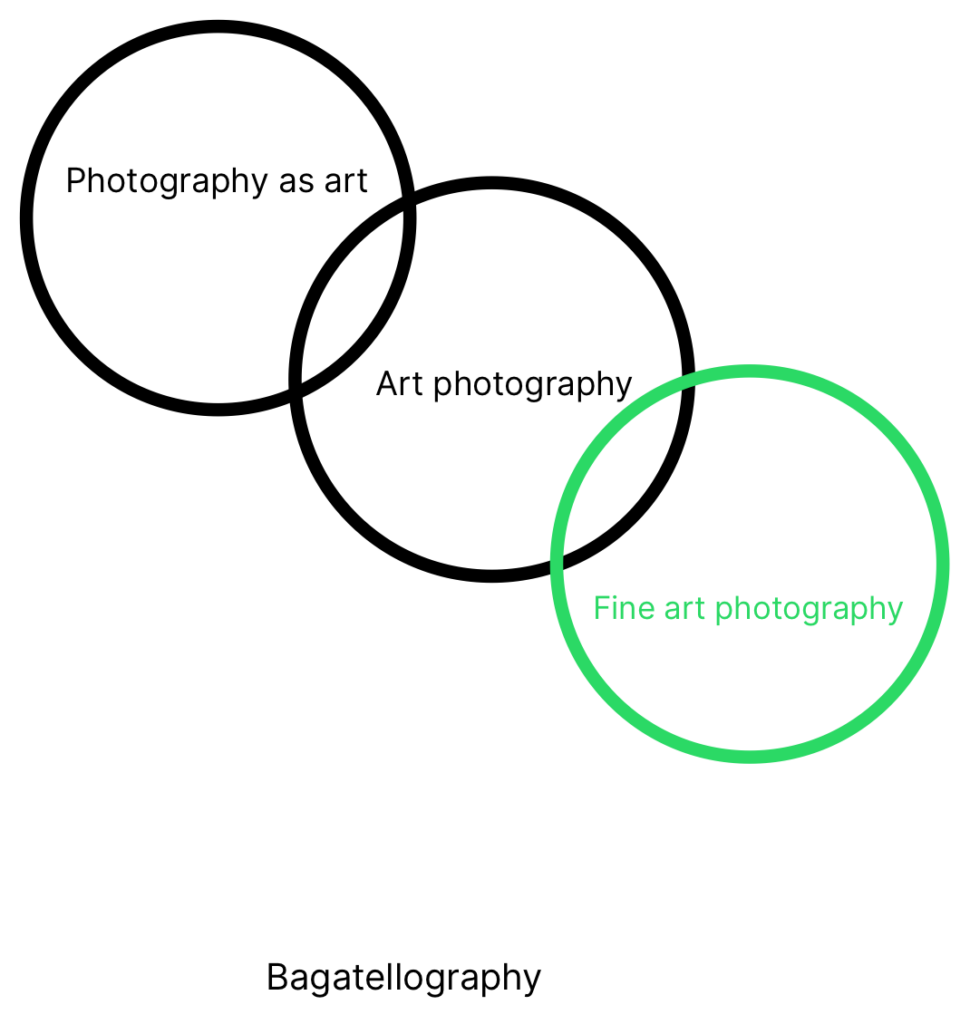
Zoltan: Fine art photography does not belong in public spaces; it finds its home in galleries and with collectors. It aims to be exhibited. The artist’s vision and viewpoint shape the work. You often see fine art photography in limited edition books and galleries, both physical and online. These pieces are numbered and signed. They hold a certain value. Fine art photography follows technical norms, but twists them to create effects and emotions. The concept is set before the photograph is taken. A fine art photograph’s value is often determined by the reputation of the artist. A well-known name enhances desireability and market demand. Photographs by recognized artists are sought after by collectors, who value their unique vision. The artist’s status can raise the value of these photographs, making them highly esteemed pieces for collectors.
Bagatellosophy # 4 — Art photography?

Yun-Yun: And what about art photography?
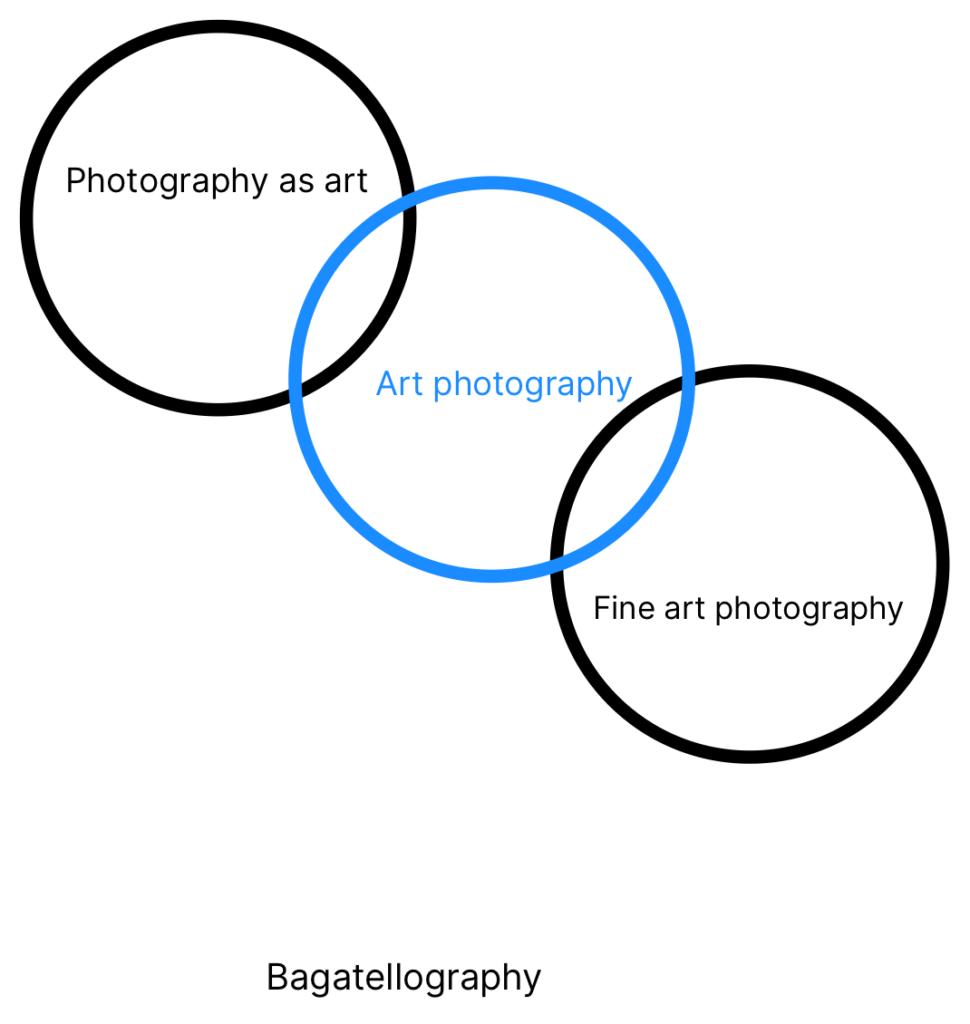
Zoltan: Art photography is decorative. It offers a softer touch. These images hang on walls, appear in magazines, and raise interest in portfolios. They lack strong views, whether political, religious or personal. They attract those, who seek beauty and calmness in their spaces. Designers prefer creating tranquil environments in hotels, offices, and public areas. The techniques vary. There are simple shots, camera movements, multiple exposures, and filters. Mixed media can merge with photography as well. Subjects range from abstract to quirky, appealing to many, without challenging the viewer. In essence, art photography hangs quietly, a subtle, captivating addition to any setting.
Bagatellosophy # 3 — Photography as art?

Yun-Yun: Wait a minute, is Bagatellography art photograpy?
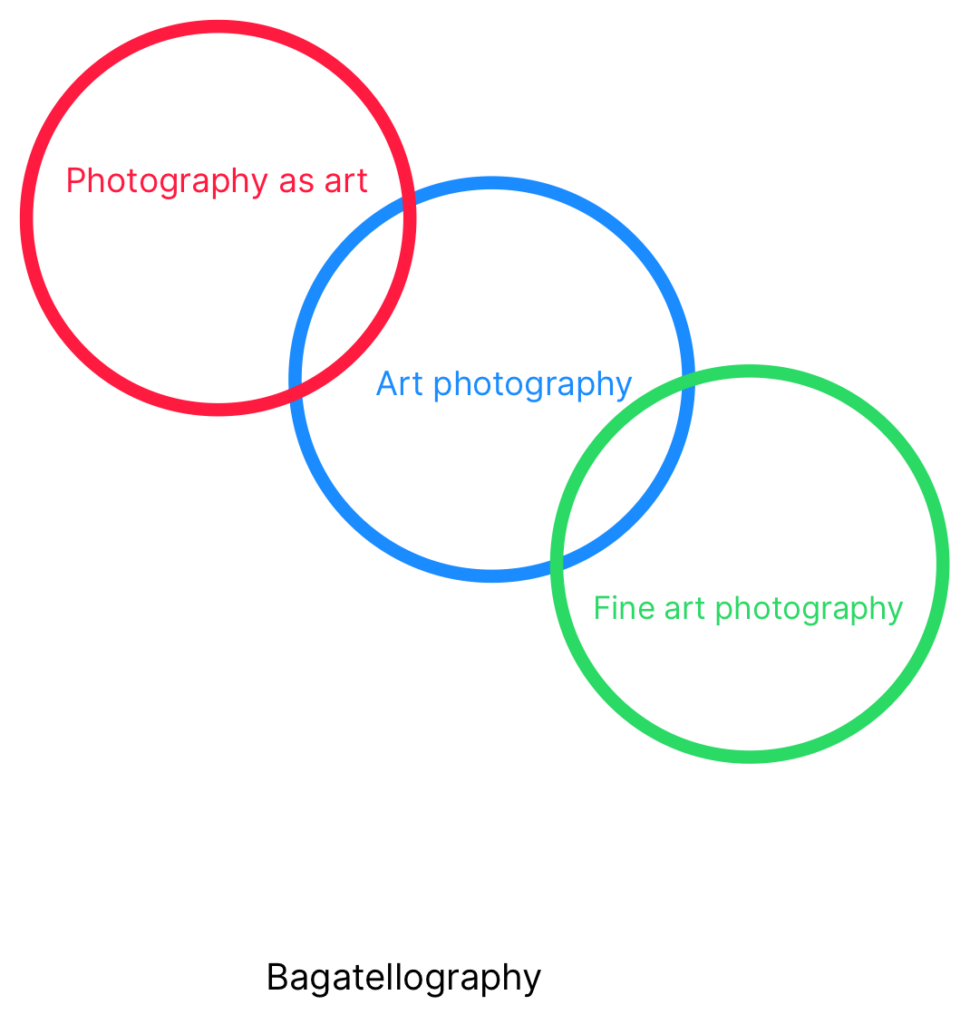
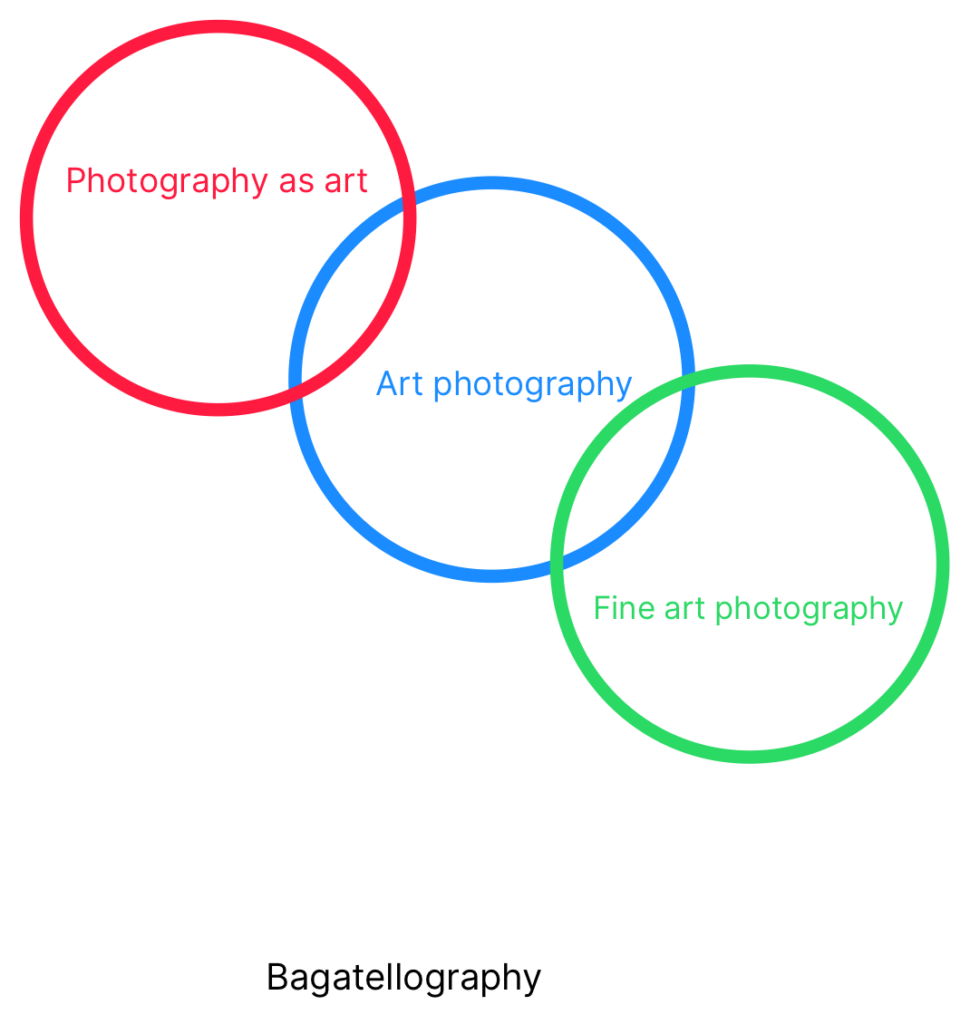
Zoltan: Ehhhm. It’s more complicated. There is photography as art, art photography, and fine art photography.
Yun-Yun: What do you mean? What is the difference?
Zoltan: Let’s look at Photography as Art. For some, the appeal is in the challenge itself. They seek the perfect image, a high-quality capture. They work carefully with light, composition, and processing. The drive for technical excellence motivates them and they are focused on details. Then there are others. They see the flaws in the process and embrace them. For them, photography is a tool for exploration. They break the rules, try new techniques, and use unconventional gear. They welcome the unpredictability as part of the journey. These two ways—chasing perfection and seeking expression—show the richness of photography. It holds space for precision and experimentation. Photographers can share their vision and create diverse works. Whether they chase mastery or exploration, they find freedom in the endless possibilities of what photography offers.
Bagatellosophy # 2 — Amateur photography?

Yun-Yun: Is Bagatellography a kind of amateur photography?
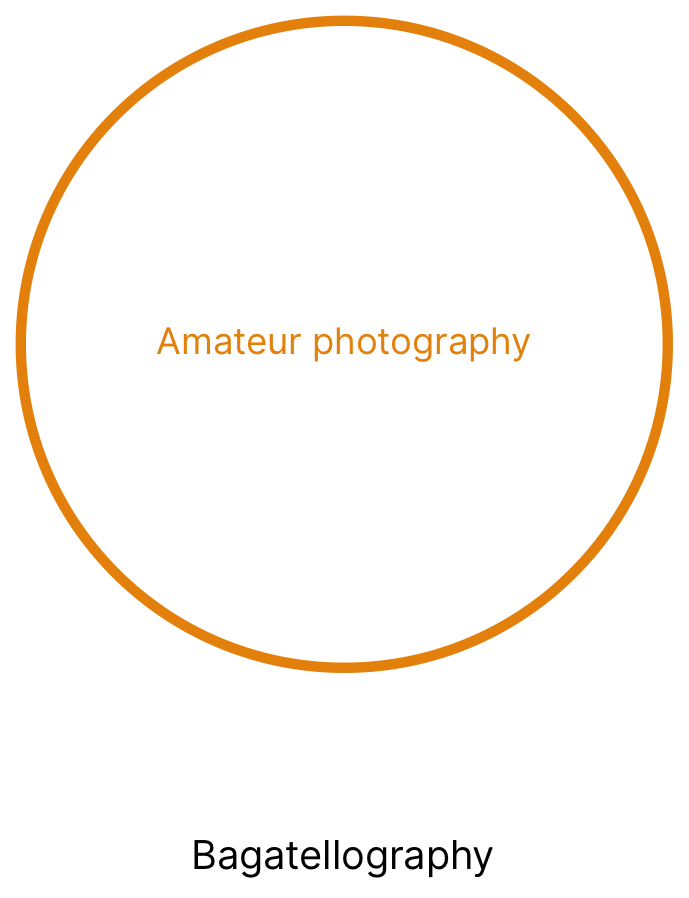
Zoltan: First, who are the amateur photographers? Their style grows with time. The photos reflect who they are. They know composition well: leading lines and framing. They can use the camera manually. They can manipulate settings to get the effect they want. They handle editing and know color correction, cropping, and retouching. They have their gear and understand its strengths and weaknesses. They feel something for their photographs. That is why they take them. Bagatellography lacks that commitment to its subject.